Chinese Gift-Giving Etiquette: What to Bring (and What Never to Give)
The first time a Shanghai colleague invited me to dinner at her parents’ flat, I almost bought a wall clock.
It was early spring, a Saturday around 5 p.m. I was standing in a housewares aisle near People’s Square with a boxed quartz clock in my hands because it looked useful and mid-priced. A Chinese friend who had come along to help me pick fruit glanced at the box, made a face, and said quietly, “Put that back. 送钟. Sounds like seeing someone off for good.” We left with a bag of apples and a tin of tea instead. At the door her mother took both with both hands, smiled, and set them aside without opening anything. The evening went fine. The clock stayed in the store.
Chinese gift giving etiquette is mostly about avoiding a few loud puns and reading the room. You do not need a museum lecture. You need a short list of safe defaults, a shorter list of hard avoids, and a sense of how people actually hand things over.
This page is for visitors, new expats, and office guests who want to show up without making the host do emotional damage control.
When do gifts show up in China?
Gifts are common when you visit someone’s home, join a family dinner, thank a host after they have helped you, or mark Chinese New Year and other reunion moments. Business and office gifts exist too, usually smaller and more careful about hierarchy and reciprocity.
You will also see soft refusals. Someone may push a gift back once or twice before taking it. That is politeness in many households, not a hard no. If they refuse firmly and change the subject, stop pressing.
What are safe things to bring?
Fruit. Apples, oranges, and mixed fruit baskets travel well. Buy an odd or “lucky” count when you can (six or eight pieces feels better than four). Skip pears for couples and close friends if you have another option; more on that below.
Tea, nuts, or a sealed snack tin. Easy to share. Easy to store. Hard to misread.
A small dessert box from a known bakery. Good for a family table. Ask whether anyone avoids dairy or nuts if you already know the household.
Specialty food from your home country (vacuum-packed, labeled, not homemade mystery jars). People often like the story attached: where it comes from, how you eat it.
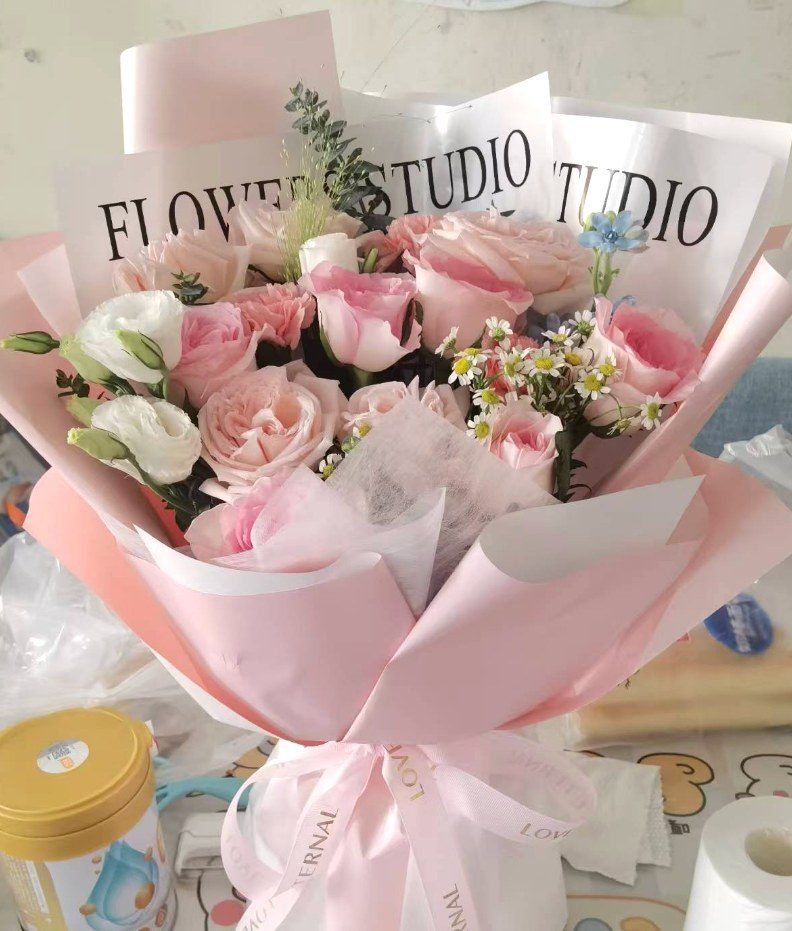
Flowers, with care. Bright bunches can work for some hosts. Avoid all-white arrangements and funeral-coded chrysanthemums unless you know the occasion is mourning-related and that is the point. Pink or red wrapping on a celebration or anniversary bouquet is fine; that is not the same as a funeral arrangement.
For a first home visit I now default to fruit plus tea. Boring on purpose. Boring survives translation.
Home visit vs dinner invitation vs office
Home visit. Bring something the household can share later. Present it soon after you enter, with both hands if you can manage it. Do not expect them to open it in front of you. Many hosts park the bag on a side table and keep talking. That is normal, not cold.
Dinner invitation. Same idea, slightly lighter. If they already cooked a full spread, fruit or dessert beats a second main dish nobody planned fridge space for. If the night is a restaurant meal they are treating, a small gift still helps; do not escalate into an expensive contest.
Office / colleague. Keep it modest. Same gift type for people at the same level if you are giving around a team. Hand a personal thank-you gift privately when you can, so nobody feels staged. For a manager, follow whatever your company policy allows; some workplaces limit value.
I once brought four identical snack boxes for a Beijing project team before Spring Festival travel week. A Chinese coworker swapped one box out of the pile before we handed them over and muttered, “Four is a bad look.” We split one box between two people and walked in with five. Nobody commented. The number change was the whole intervention.
Chinese New Year / host notes. Red envelopes (hóngbāo) with money are a separate custom with their own rules (who gives to whom, crisp bills, even amounts that avoid the number four). If you are a short-term visitor, ask a trusted local colleague before you invent your own envelope math. Food gifts and fruit remain safer for many foreign guests than guessing cash etiquette on night one.
What should you never give?
These are classic taboos taught widely to foreigners. Real families vary. When someone you trust clears an item, follow that household. Until then, treat the list as high-cost mistakes, not cute trivia.
Clocks and watches. The phrase sòng zhōng (送钟, give a clock) sounds like sòng zhōng (送终, attend someone through the end of life). That People’s Square near-miss still sits in my head every time I walk past a clock wall. If a clock is somehow the only right object, some people turn the moment into a token “purchase” with a coin so it is not framed as a pure gift. Easier path: buy something else.
Umbrellas. Sǎn (伞) echoes sàn (散, to scatter / split up). Fine as a practical loan when it is raining outside the subway. Awkward as a wrapped present to a couple.
Pears. Lí (梨) sounds like lí (离, to leave / separate). On that same Shanghai run we almost added pears because they looked expensive and “host fancy.” My friend steered us to apples. “Save the pears for a grocery run, not a first dinner with someone’s parents.”
Sharp objects (knives, scissors). The metaphor is obvious even without a pun: cutting a relationship. A beautiful kitchen knife set can feel like a breakup prop.
Sets of four. Sì (四) sounds close to sǐ (死, death). Four wine glasses, four tea cups, four snack boxes: swap to six or eight when you can. Elevators that skip a fourth floor are the same sound-logic in architecture form.
White or black wrapping (and heavy funeral colors). Red and gold read festive. White and black show up in mourning contexts. I once grabbed the only sturdy gift bags left in a stationery shop near Dongzhimen; they were matte black. The clerk shook her head and pointed at a red shelf without a sales pitch. I listened.
Shoes. Xié (鞋) sits near xié (邪, sinister / crooked), and “giving shoes” can also read as helping someone walk away. Save sneakers for people who asked for them.
Handkerchiefs. Old funeral and farewell associations. A pack of nice tissues is not the same culturally as a ceremonial handkerchief gift, but if you are unsure, pick tea.
None of this is meant to scold. Pun-based taboos feel random until you hear one land in a quiet room. Then you understand why locals flinch early.
How do numbers and wrapping colors work?
| Choice | Safer lean | Why foreigners care |
|---|---|---|
| Count | 6 or 8 when giving multiples | 4 sounds like death; 8 is widely treated as lucky |
| Wrap color | Red, gold, pink, cheerful patterns | White / black / heavy blue can read as mourning |
| Card ink | Dark blue or black | Red ink has harsh associations in some settings |
| Presentation | Both hands; neat bag or box | Shows care; crumpled plastic bags look last-minute |
| Opening | Usually later, not mid-handshake | Hosts avoid “greedy” optics and possible awkward reactions |
Spend enough to look sincere. Do not spend so much that the host feels trapped into matching you. Reciprocity pressure is real; oversized gifts can create stress, not delight.
How do you give, refuse, and receive?
Hand the gift over with a short line: “A small something for the house” works in English. If you have a Chinese phrase ready, yīdiǎnr xiǎoyìsi (一点儿小意思, just a small token) is common and keeps the tone light.
If they refuse once, offer again calmly. If they refuse twice and smile, offer a third time. If the refusal hardens, thank them and drop it. Forcing a gift after a real no is worse than leaving empty-handed.
When you receive something, take it with both hands, say thank you, and do not rip it open unless they ask. Send a message later if the gift was thoughtful. A photo of the item in use is optional; a plain thank-you is enough.
At shared meals the gift is not the main performance. Put it down. Sit. Eat. If the night turns into hot pot or a long dinner, the food conversation will carry more weight than the bag by the door. See our Chinese Hot Pot for Beginners guide if the table format is new to you.
Seasonal note without the travel brochure
Before Dongzhi family meals and before Spring Festival visits, grocery floors fill with gift fruit boxes and snack towers. That is a useful visual cue: buy what locals are already carrying into elevators. Skip inventing a “cultural masterpiece” gift. Match the season’s ordinary hospitality.
Quick FAQ
Should I open a gift in front of the giver?
Usually no, unless they invite you to. Opening later is common.
Is cash always better?
No. Cash in red envelopes has specific relationship rules. Food and fruit are safer for many first-time guest situations.
What if I already gave a taboo gift?
Apologize briefly if someone explains the pun. Do not deliver a speech. Most hosts care more about your next choice than a perfect past.
Do young urban hosts still care?
Many do, especially around elders. Some close friends wave taboos off. When parents or in-laws are in the room, play it safer.
Next reading
Gift rules sit in our Everyday Etiquette lane (temporarily filed under Festivals until that category exists). For a winter family meal where a simple shareable gift still helps, see Dongzhi Festival. For the loud shared table many hosts pick on cold nights, see Chinese Hot Pot for Beginners.
About the author
I’m Alvin. I write chinas365.com for foreign readers who have to show up at real doors (Shanghai dinners, Beijing offices, holiday grocery runs), not brochure ceremonies. The clock aisle near People’s Square, the four snack boxes we quietly turned into five, and the black gift-bag near miss at Dongzhimen are mistakes I either made or almost made so you can skip them.
Sources
- SBS Cultural Atlas. Chinese etiquette (gifts): both hands; soft refusals; wrapping colors; avoid fours; listed taboo items. culturalatlas.sbs.com.au
- Belgian-Chinese Chamber of Commerce (BCECC) on business gift-giving: clock funeral homophone; shoes; fours; pears; sharp objects; handkerchiefs; white flowers. bcecc.be
- Confucius Institute / China 101 visitor briefing (NZ CI PDF): red/gold wrap; avoid white/black wrap; scissors/knives; umbrella/pear puns; clocks/handkerchiefs; avoid fours. ci.ac.nz PDF
- Common visitor-guide consensus: open gifts later unless invited; modest value to reduce reciprocity pressure; prefer 6/8 over 4 for multiples.